Showing posts with label storms. Show all posts

Monday, December 15, 2014

Standing in the Path of the Storm: The God of the Storm (Part 4 of 4)

My last three posts have been about Standing in the Path of the Storm:
I've been pointing to the amazing story of King Jehoshaphat in 2 Chronicles 20, and suggesting that his desperate prayer for his nation is a great model for our own lives. So far I mentioned five lessons to learn from Jehoshaphat. Here’s one more...

6.  Expect Complete Victory.
When God delivers, He does so decisively. Here’s how 2 Chronicles reports it:

As they began to sing and praise, the Lord set ambushes against the men of Ammon and Moab and Mount Seir who were invading Judah, and they were defeated. The Ammonites and Moabites rose up against the men from Mount Seir to destroy and annihilate them. After they finished slaughtering the men from Seir, they helped to destroy one another. (vv. 22-23)

In the end the voluminous provisions these invaders had brought, with the probable intent  of repopulating Judah, instead became  an abundant overflow of God’s blessing.

When the men of Judah came to the place that overlooks the desert and looked toward the vast army, they saw only dead bodies lying on the ground; no one had escaped. So Jehoshaphat and his men went to carry off their plunder, and they found among them a great amount of equipment and clothing and also articles of value—more than they could take away. There was so much plunder that it took three days to collect it. (vv. 23-25)

If you summarize this victory, you have to include:
            Enemies destroyed;
            Super-abundant plunder;
            God’s people rejoice;
            God’s reputation is exalted.
            And the kingdom enjoys peace!

God doesn't always win the victory the way we’d prefer. But He is the God of the storm. Even the wind and the waves obey Him. And in the end, He brings His people to safety and to blessing. 

Monday, December 8, 2014

Standing in the Path of the Storm: Praying in the Middle of the Storm (Part 3 of 4)

King Jehoshaphat faced a leader’s worst nightmare: his nation was about to be invaded by a huge coalition of three enemy armies, and Judah’s defenses stood no chance of repelling them. Jehoshaphat brought his people together and led them in desperate prayer. I tried to tell a parallel story from our own history - surviving a tornado. Last time I shared some lessons about prayer  and here are a couple more. (And if you haven't reviewed the story in 2 Chronicles 20, you should check it out here.)

3. Wait for God to Communicate.

When Jehoshaphat finished his prayer, there was nothing more to say. While the enemy army drew nearer, “All the men of Judah, with their wives and children and little ones, stood there before the Lord” (v. 13). They simply waited.

And God spoke through a man named Jehaziel (v. 14).

Thursday, December 4, 2014

Standing in the Path of the Storm: Prayer for the Gathering Storms Ahead (Part 2 of 4)

Last time I spoke of surviving a tornado, and the lessons about prayer I began to learn from studying Jehoshaphat’s example and leadership in 2 Chronicles 20. (If you haven’t read this chapter recently, you should. Click here.) 

I have five lessons I’d like to share in the next few posts. For today, the first two…

God’s response to Jehoshaphat’s desperate prayer was gracious and powerful. Looking at desperate times through the lens of the king’s example, I began to see some principles of prayer for the gathering storms ahead.

1. Measure the Storm by the Character and Promises of God.

Jehoshaphat brought his people together in grave recognition of the nation’s peril. But then he led them to focus on Almighty God, claiming His power and promises.

First he focused on God’s attributes. O Lord, God of our fathers, are you not the God who is in heaven? You rule over all the kingdoms of the nations. Power and might are in your hand, and no one can withstand you” (v. 6).

When we gauge the fury of the storm by the power of Almighty God, the storm is absolutely dwarfed!

Then Jehoshaphat reminded God of His promises to His people. “O our God, did you not drive out the inhabitants of this land before your people Israel and give it forever to the descendants of Abraham your friend? They have lived in it and have built in it a sanctuary for Your Name, saying, ‘If calamity comes upon us, whether the sword of judgment, or plague or famine, we will stand in your presence before this temple that bears your Name and will cry out to you in our distress, and you will hear us and save us.’” (vv. 7-9).

Jehoshaphat echoed the words of King Solomon, who prayed to dedicate the temple a century before. The night after the ceremony, the Lord appeared to Solomon and made a promise that His people have been claiming ever since. It must have been on Jehoshaphat’s heart in the middle of the storm:

If My people, who are called by My name, will humble themselves and pray and seek my face and turn from their wicked ways, then will I hear from heaven and will forgive their sin and will heal their land” (2 Chronicles 7:14).

Centering our thoughts and emotions in the Scriptures will help us pray through the storm. Passages about His wisdom, power, mercy, faithfulness, and goodness strengthen and equip us to ride out the storm in confidence.

We may begin with “Have mercy!” But from there we can learn to proclaim aloud the beauty of His holiness and the power of His promises.

2. Demonstrate Helpless Dependence on God.

Judah’s assembly was an eloquent testimony to their dependence upon the Lord. Whole families stood together, babies in arms, praying and fasting  (cf. v. 13). They knew God was their only hope.  If He didn’t intervene, they would be destroyed.

Jehoshaphat ended his prayer with this humble statement: “ . . . we have no power to face this vast army that is attacking us. We do not know what to do, but our eyes are upon you” (v. 12).

The storm forces us to this place of dependence, confessing that nothing else has the slightest chance of saving us. Not our possessions or our connections, not our personalities or our education. Not our religion or our luck.

Letting God know we know that He is our first, last, and only option is a good thing. While it is true that we can pray from any position, our posture can mirror the attitude of our hearts. Sometimes I feel the need to pray, flat on my face. Other times standing with hands raised to heaven. Similarly when we say no to food or to sleep for a time, we remind ourselves, and God, that we are counting on Him, and Him alone.

Corporate prayer, fasting, and confession allow us to say, while the storm rages around us, our hope is in You, Lord. Only You.

For next time: Praying in the Middle of the Storm

Tuesday, December 2, 2014

Standing in the Path of the Storm: Learning to Pray through Desperate Times (Part 1 of 4)

In my last post I mentioned an old Bible of mine that always opens to 2 Chronicles 20. This is the story of why.   

What do you do when you’re standing directly in the path of a tornado?

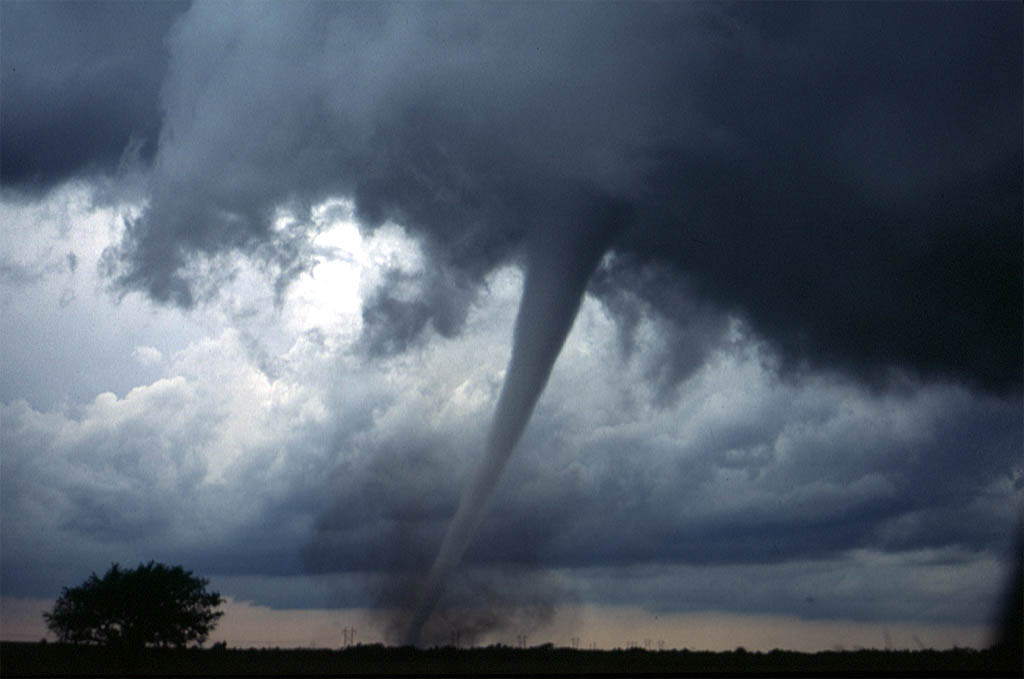
I found out on June 29, 1998, as I huddled in the darkness of the basement, our house shuddering from the force of the wind as it cut a swath through the northern Des Moines metro.  In only minutes the sky went from a serene blue to an angry charcoal. Rain, whipped by nearly 100-mile-an hour winds, plastered shredded leaves to the sides of our house and poured through an open window. Broken glass sliced through my office as the window casement was wrenched away. Trees were snapped off fifteen feet above the ground or torn out by their roots. My neighbor’s camper ended upside down in someone else’s backyard. Shingles sailed by like flocks of Frisbees.

As the thunder and lightning escalated, the power went out, and the entire house began to tremble. Sirens started to blare, a warning to seek cover. As I headed for the basement, my mind flashed on the movie “Twister”—the scene where a man is ripped out of a storm shelter and sucked into the mouth of the monster wind.

Wednesday, May 28, 2014

Mighty Fortress

My fears, my sins, my pride
Rage and foam and crash,
Broken against Your eternal shore.

I recede, spent and fading,
Until I run again
But gentled against the smooth warm sand.

You stand serene and steady,
A mountain in the frantic sea,
Mighty fortress.

I finally slip and sigh
And feel Your granite, forged eternal
Above and below me.

Wednesday, September 5, 2012

Safe Passage Through the Storm


Jesus’ calming the sea is one of my favorite stories. I’ve written about aspects of it before: Storm at Sea, and Rescue Mission.

But I was reading it again in Luke 8, and I found more to admire about the Savior.

I don't blame the disciples for being terrified when the storm raged around them. But the truth is, they were as safe and secure as if they had already arrived.

Why? Because Jesus told them, Let us go across to the other side (Luke 8:22). When Christ determines a destination, He assures safe passage and certain arrival.

Jesus didn’t say, “Hold on and pray hard—a storm’s coming! Let's hope we make it.” He was so confident they would make it that He took a nap! …as they sailed he fell asleep (v. 23). 

Of course the disciples’ growing panic got worse when the Lord fell asleep. He seemed to be ignoring--or unaware of--the danger they were in. “Master, Master, we are perishing!” they cried. And after all, who sleeps during a storm? Answer: Somebody who is at peace within Himself and completely unafraid of the harshest forces of nature.

Sometimes, in the middle of the storm, it feels like the Lord is asleep, unconcerned about our circumstances. But despite appearances or feelings, He is completely in control and absolutely committed to His good plan for His children.