Showing posts with label Holy Week. Show all posts

Sunday, March 31, 2013

The Most Wonderful Life

In Frank Capra's beloved film “It’s a Wonderful Life,” Jimmy Stewart’s character George Bailey gets to see what the world would be like if he had never been born. The absence of his life ripples through Bedford Falls, and presents a parallel universe that is ugly and cruel. He ends up begging to live again, and concludes that his life, with all its challenges, is truly wonderful.

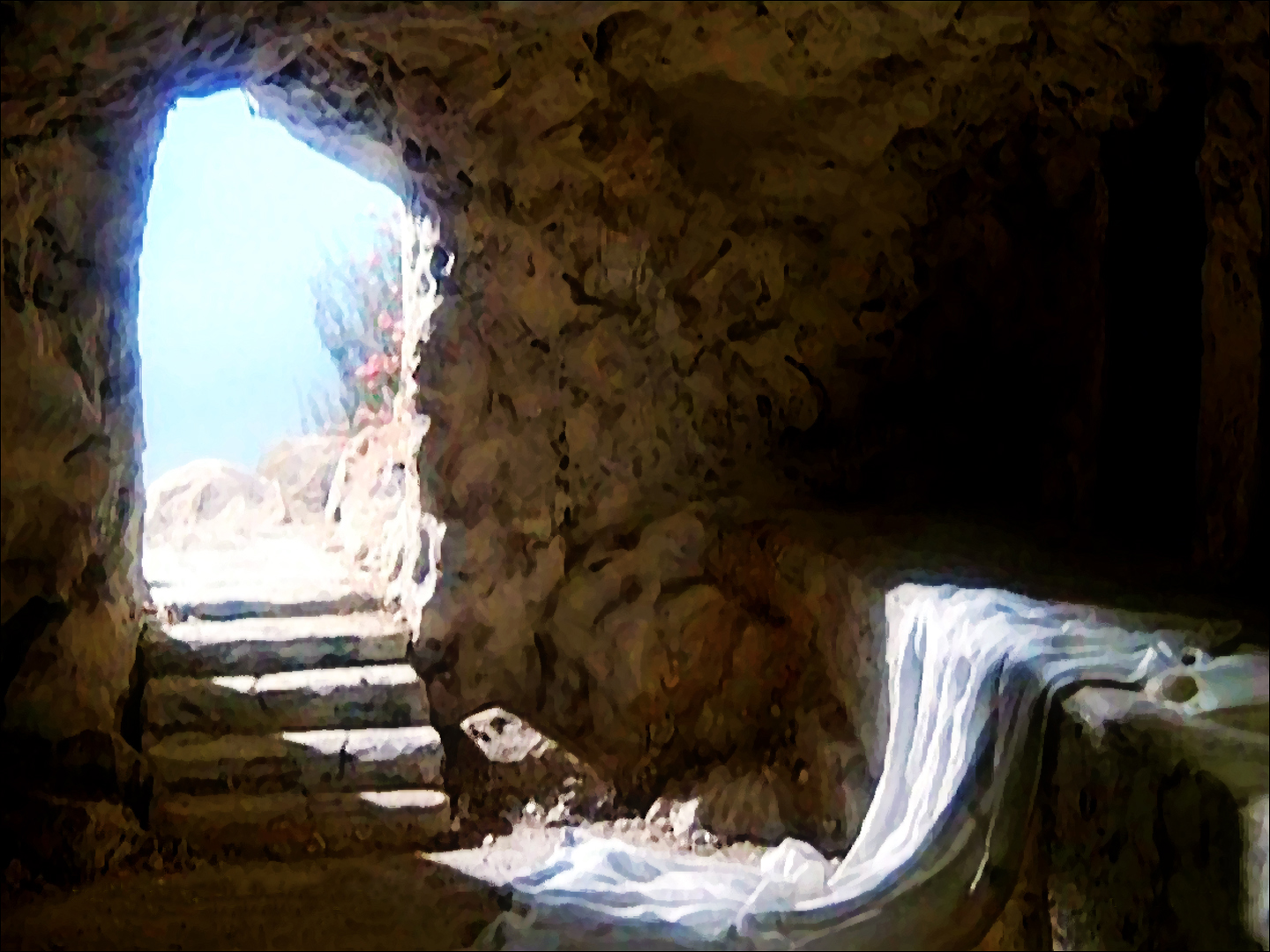
Did you ever think what our world would be like if Christ had not risen from the dead? I considered simply pasting a graphic of a smoldering cinder as my assessment of where our planet would be without the Resurrection. I just don’t believe this world would have survived.


If Jesus had not been raised:


  • No payment for our sins and no forgiveness

  • No heaven, only hell

  • No gospel message

  • No transformed lives throughout history

  • No apostolic witness and no church

  • No New Testament, and an Old Testament riddled with false prophecy

  • No Christian hospitals, orphanages, half-way houses, or homeless shelters

  • No Apostle Paul, Constantine or Augustine

  • No Gutenberg, John Wycliffe, or Martin Luther

  • No William Tyndale, John Calvin, or John Bunyan

  • No Jonathan Edwards, Wesley brothers, or George Whitefield

  • No William Carey or D. L. Moody

  • No C.S. Lewis, Billy Graham or J.I Packer

  • No peace for the present or hope for the future


But thank God, this is not a day for terrible possibilities. This is the day we set aside to proclaim the central truth of our faith: Our Savior died for our sins and was raised from the dead! And because Jesus rose,

  • We who know Him are indwelt by the Spirit and live in the power of His grace.
  • We have the hope of heaven.
  • Those who died in Christ wait for us there, and we will be reunited.
  • We are redeemed, forgiven, justified, reconciled, and adopted..
  • Our lives have eternal value and our actions have everlasting consequences.
  • We know that love, truth, justice, and hope will prevail over hatred, lies, oppression, and despair.
  • We have a message to share that is supernaturally transforming from a Bible that is absolutely trustworthy.
  • We’re part of a band of redeemed sinners that stretches back through the centuries, and marches forward into the future until our King returns to claim all that is His.

 Oh, Jesus, how thankful we are that You rose again!

HE IS RISEN, RISEN INDEED!

Friday, March 29, 2013

When the Worst Thing Actually Happens


This is Good Friday, but it wasn’t good for Jesus. It was indescribably terrible, when He who knew no sin became sin.

Last night I was reading the story of Jesus’ Upper Room ministry to His disciples. Right before He washed their feet (including, of course, Judas’), John said this: Jesus, knowing that the Father had given all things into his hands, and that he had come from God and was going back to God, rose from supper. He laid aside his outer garments, and taking a towel, tied it around his waist (John 13:3-4, my emphasis).

What? All things were given into His hands? Did the “all things” include His own impending torture, death, and separation from the Father by being identified with the filthy sin of all God’s elect?

Yes, it did. Jesus said of  the laying down of His life: No one takes it from me, but I lay it down of my own accord. I have authority to lay it down, and I have authority to take it up again. This charge I have received from my Father (John 10:18).

The worst thing imaginable happened. The best Man who ever lived, the only truly innocent man, was charged and convicted by false testimony of crimes He never committed. The kindest, most loving, Man our race will ever know was cruelly humiliated and tortured, and then slowly put to death.

Somehow, in ways I cannot untangle, the worst thing that ever happened was the best thing that ever happened.

I know people who have had the “worst thing” actually happen to them. Loved ones die, awful disease afflicts, women are brutalized, evil people abuse little children. 

Our God really is in charge of all things, yet without being the author of sin. Scripture says that the worst things that happens are still held in the hands of Jesus. I don’t fully understand, but it helps that those hands have nail prints in them.

Christ's worst thing became Good Friday. It became the complete payment for the sins of His own, and opened heaven to people like me who were sliding to hell. 

I believe that in His timing, wisdom and love, the worst things that happen to us will become best under His kind and all-powerful hands. Hallelujah, what a Savior!

Monday, March 25, 2013

Why is That Man Crying?

Why would He be crying? His entry into Jerusalem was the first-century equivalent of a ticker-tape parade. He was surrounded by adoring multitudes, many thousands who accompanied Him on the two-mile trek from Bethany into the holy city, and many more thousands who streamed out of the city to welcome Him.

They cheered and worshiped and sang Scripture songs to Him: Hosanna! Blessed is he who comes in the name of the Lord (Mark 11:9). They paved His way into the city with palm branches and cloaks, just as their ancestors did nearly 200 years before in honor of the Jewish hero Judas Maccabeus.

So why the tears? And when he drew near and saw the city, he wept over it (Luke 19:41). Sure, Jesus had wept before, actually only weeks before, at the tomb of His friend Lazarus. But that had been quieter, self-contained. This time the sobs wracked His body, this time He wailed in anguish.
 
But why? Why, when He was, at that moment, the most popular man in Palestine?

Jesus knew that the adulation of the crowd might have been a mile wide, but it was only an inch deep. The cheering multitudes wanted free food—loaves and fishes multiplied —but not the Bread of Life. They wanted free healthcare—diseases healed and demons cast out—but not the healing of their souls. They wanted Rome off their backs, but didn’t want to bend the knee to the one true King.

Jesus the Suffering Servant wept for their lost opportunities. Would that you, even you, had known on this day the things that make for peace! But now they are hidden from your eyes (Luke 19:42).  But Jesus the righteous Judge pronounced a sentence on the city and the people who rejected Him: For the days will come upon you, when your enemies will set up a barricade around you and surround you and hem you in on every side and tear you down to the ground, you and your children within you. And they will not leave one stone upon another in you, because you did not know the time of your visitation. (Luke 19:43-44).

Only forty years later, Titus’ army finally overran the city, and Jerusalem was destroyed. The Jewish historian Josephus says over a million people died in the slaughter.

When Jesus wept over Jerusalem, He had a lot on His mind. He is no shallow King, buoyed by the fickle praise of a rebellious people. He is the Lamb slain before the foundation of the world, and He had His work to do.

Sunday, April 8, 2012

HE IS RISEN!


He is Risen!

 Risen indeed!

Christ’s resurrection in three words:

PROOF
For he has set a day when he will judge the world with justice by the man he has appointed. He has given proof of this to all men by raising him from the dead. Acts 17:31, NIV
 PARDON
because, if you confess with your mouth that Jesus is Lord and believe in your heart that God raised him from the dead, you will be saved.  For with the heart one believes and is justified, and with the mouth one confesses and is saved. Romans 10:9,10 ESV
 POWER
Do you not know that all of us who have been baptized into Christ Jesus were baptized into his death? We were buried therefore with him by baptism into death, in order that, just as Christ was raised from the dead by the glory of the Father, we too might walk in newness of life. For if we have been united with him in a death like his, we shall certainly be united with him in a resurrection like his. We know that our old self was crucified with him in order that the body of sin might be brought to nothing, so that we would no longer be enslaved to sin. For one who has died has been set free from sin. Now if we have died with Christ, we believe that we will also live with him.  We know that Christ, being raised from the dead, will never die again; death no longer has dominion over him. For the death he died he died to sin, once for all, but the life he lives he lives to God. So you also must consider yourselves dead to sin and alive to God in Christ Jesus. Romans 6:3-11, ESV
Happy Resurrection Day!

Saturday, April 7, 2012

Holy Week: Saturday


Saturday is a day of anticipation. We wait for the greatest day, the day when our Lord was raised from the dead.

As we wait for tomorrow, I thought I would raise a couple questions that puzzle many people. The answers are from Wayne Grudem’s great book Systematic Theology: An Introduction to Biblical Doctrine.

If Christ paid the penalty for our sins, how come He suffered for such a short time?
Answer: If we had to pay the penalty for our own sins, we would have to suffer eternally in separation from God. However, Jesus did not suffer eternally. There are two reasons for this difference: (a) If we suffered for our own sins, we would never be able to make ourselves right with God again. There would be no hope because there would be no way to live again and earn perfect righteousness before God, and there would be no way to undo our sinful nature and make it right before God…(b) Jesus was able to bear all the wrath of God against our sin and to bear it to the end. No mere man could ever have done this, but by virtue of the union of divine and human natures in himself, Jesus was able to bear all the wrath of God against sin and bear it to the end….When Jesus knew that he had paid the full penalty for our sin, he said, It is finished” (John 19:30). If Christ had not paid the full penalty, there would still be condemnation left for us. But since he has paid the full penalty that is due to us, “There is therefore now no condemnation for those who are in Christ Jesus” (Rom. 8:1).
…if there is eternal suffering, it simply shows that the penalty has never been fully paid, and that the evildoer continues to be a sinner by nature. But when Christ’s suffering at last came to an end on the cross, it showed that he had borne the full measure of God’s wrath against sin and there was no penalty left to pay. It also showed that he was himself righteous before God. In this way the fact that Christ suffered for a limited time rather than eternally shows that his suffering was a sufficient payment for sins (pp. 577-578).
Did Christ descend into hell, as the Apostles' Creed says?

Friday, April 6, 2012

Holy Week: Friday


Good Friday means we mourn and rejoice at the same time. In our mind’s eye we picture the agony of our Savior. We think of His being betrayed and humiliated.

We see Pilate's attempt to release Him, and hear the crowd screaming back, Crucify Him.

We watch the torture of His scourging—how they whipped Him nearly to death, His back a bloody mess, down to the bone. And how they mocked Him and spat upon Him, and then, finally, we shudder when they crucified Him. By sundown He was dead.

But we rejoice, too. Because we know on this day our salvation was secured, our debt was paid, God's wrath was propitiated, our justification was accomplished. All by the blood of the Lamb.

Christ redeemed us from the curse of the law by becoming a curse for us--for it is written, "Cursed is everyone is hanged on a tree" (Galatians 3:13, ESV).

I don't like to think about it, but I was under a curse. And so were you. And on that day my Savior took it instead. Scripture says He became a curse for us. 

It's bad enough to be cursed, especially a curse earned by someone else. A whole lot of someone elses. But how do you become a curse? 

Perhaps the Son so identified Himself with the festering, oozing, disgusting, mass of our sins that, to the Father, Christ was that sin. All that offends God, all that calls down His wrath, all the pride, rebellion, phoniness, hypocrisy, lust, murder, and a million other transgressions, was reckoned unto Jesus. And the curse that fell, the righteous wrath, became Him, too.

Whatever "becoming a curse means," what He accomplished is gloriously certain: Christ redeemed us from the curse of the law. He did what no one else could do or would do--He paid it all and set us free.

Good Friday. The best.

Thursday, April 5, 2012

Holy Week: Thursday

Thursday of Holy Week brought Jesus and the disciples to the Upper Room, where Christ had arranged to celebrate the Passover.

Pesach, Passover, was over 1400 years old, stretching all the way back to the Exodus. For Jesus and the Twelve, it would have been a very familiar reminder of how God delivered His people through the blood of the sacrificial lamb.

But Jesus said something on this night that had never been said in fourteen centuries: This is My body. This is My blood.

Until this night, every “communion” was the same. It was a look back on what God had done to “pass over” His people when the death angel came for Egypt's firstborn. The bread and the cup were reminders. But this communion was different because by this time tomorrow, Jesus would be hanging on the cross. He was the Passover Lamb.

How we admire our Savior tonight! His heart must have been unbelievably heavy. And as they were reclining at table and eating, Jesus said, "Truly I saw to you, one of you will betray me..." (Mark 14:18).

A  lot happened that night. Before the meal, He washed the feet of all of them, including Judas. Afterward He taught them. We call it "The Upper Room Discourse," and it's recorded in John 13-16. Then He prayed for His own--the Great High Priestly Prayer of John 17.

And you know what came next. And they went to a place called Gethsemane (Mark 14:32).

Wednesday, April 4, 2012

Holy Week: Wednesday

Two days away from the cross, Jesus must have been exhausted.

Sunday, He was welcomed as a conquering hero. Monday, He cleansed the temple and solidified the determination of the religious establishment to kill Him. Tuesday, He spent the entire day confronting His critics and contending for the truth of His identity and authority.

What about Wednesday?

We sometimes call this “The Silent Day.” Jesus probably never left Bethany on Wednesday. Each of the other days, He made the two-mile trek into Jerusalem. But on this day, He did not. But why?

Scripture doesn’t say. (That’s why it’s called “The Silent Day.”) I think Jesus rested, prayed, and spent time with His closest friends, Lazarus, Mary, and Martha.
It’s a poignant picture of the Savior, gathering Himself for the agony of the atonement, spending a few precious hours in the fellowship of His friends.

How do you feel about the Savior, knowing He wanted rest and the closeness of friends around Him before His great ordeal?

Tuesday, April 3, 2012

Holy Week: Tuesday

If you knew you were being executed on Friday, how would you spend Tuesday, Wednesday, and Thursday?  I admire Christ's steady courage and unflinching focus in this holy week.

Palm Sunday was Cheering Crowds, Monday was Cleansing the Temple, and Tuesday is Contending for the Truth.  

The Lord’s cleansing of the Temple was such an affront to the religious establishment that they attacked His authority. Who do You think You are? What gives You the right to do such things? (cf. Mark 11:27-28). Jesus spent Tuesday back in Jerusalem, confronting His critics and teaching the Scriptures.

Of course they were no match for Jesus’ intellect or His spiritual acumen. He ran rings around them. He exposed their hypocrisy (Mark 11:29-33), and revealed their murderous intent in a parable (Mark 12:1-12).

Our Savior's commitment to preaching the Word even in the last hours of His life makes two things clear. First, even though He is the Word (John 1:1), Jesus relied upon the Scriptures as His authority. And second, the central message of the Scriptures is Christ Himself.
And as Jesus taught in the temple, he said, “How can the scribes say that the Christ is the son of David? David himself, in the Holy Spirit, declared,
“‘The Lord said to my Lord,
“Sit at my right hand,
until I put your enemies under your feet.”’
 David himself calls him Lord. So how is he his son?”
And the great throng heard him gladly. (Mark 11:35-37).

Monday, April 2, 2012

Holy Week: Monday

Valentin De Boulogne, c.1622
This is Holy Week. Palm Sunday marked the beginning of the end of Christ’s long journey to the cross. Sunday He rode into Jerusalem, mounted on a donkey’s colt. Thousands cheered Him with cries of “Hosanna.” They laid cloaks and palm branches before Him, leaving no doubt about His identity as Messiah of Israel.

He spent the night in Bethany at the home of His friends Lazarus, Mary, and Martha.  On Monday He came to the Temple again.

Herod's Temple Mount was huge, 1.5 million square feet in size. It was magnificent, beautiful, imposing. But what Jesus saw in the Temple courtyards did not please Him. 

Vendors and money changers were plying their wares in the Courtyard of the Gentiles, ripping people off and making a mockery of the sacred space. 

He drove them out, quoting Isaiah 56:7 in the process:  "It is written, 'My house shall be a house of prayer,' but you have made it a den of robbers."

He said My house. The Temple is His temple.

Jesus is kind and gentle and patient. But the Temple belongs to Him, and He has a right to drive out whatever displeases Him. Like Paul said, Or do you not know that your body is a temple of the Holy Spirit within you, whom you have from God? You are not your own, for you were bought with a price. So glorify God in your body (1 Corinthians 6:19, 20 ESV).